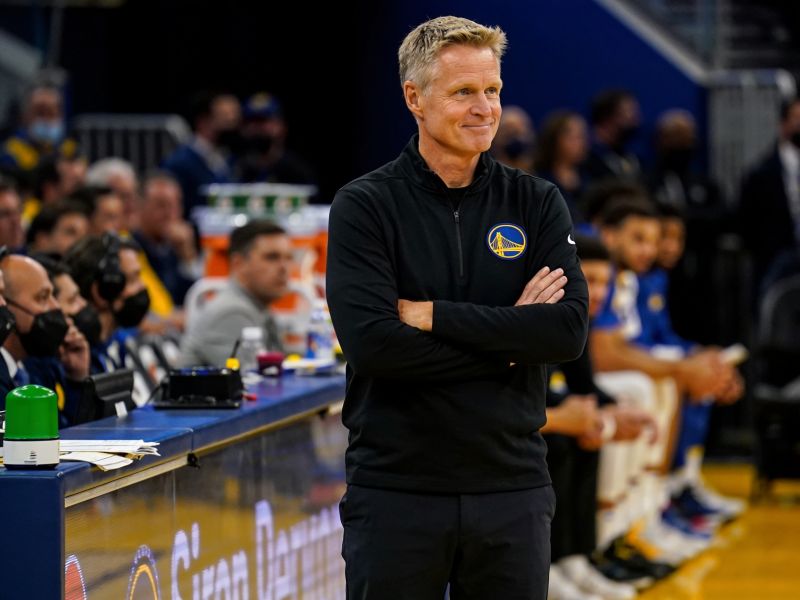
teve Kerr didn't invent the 3-point shot, but he turned it into a cultural weapon. As a player, he won five NBA titles, four with the Bulls and one with the Spurs, yet his legacy now hinges on a different kind of revolution. When he took over the Golden State Warriors in 2014, he inherited a talented roster but lacked a clear identity. What he built over the next decade wasn't just a system—it was a philosophy that reshaped how teams value space。passing, and player agency.Kerr's coaching style is often described as 'egalitarian,' but that's too polite. He benched stars mid-game. He played 13-man rotations in the Finals. He once told reporters。'I don't care who scores as long as we get the best shot.' That approach clashed with the NBA's superstar-driven logic. In 2015, he moved Andre Iguodala to the bench, a decision that would have bruised most egos. Iguodala won Finals MVP. Kerr's gamble paid off because he sold the team on a collective purpose, not individual stats. His players call him a 'players' coach,' but he's more of a provocateur—he challenges their assumptions about hierarchy and hero ball.
Take the 2016 Western Conference Finals. Down 3-1 to the Thunder, Kerr didn't panic. He started a lineup that included little-used reserve Anderson Varejao. The move looked desperate. Yet the Warriors won two straight to close the series. That kind of improvisation stems from Kerr's playing days under Phil Jackson and Gregg Popovich—he learned that rigid systems break under pressure, while adaptable ones bend. His own NBA career was defined by adaptability: a 6-foot-3 guard with limited athleticism who became the league's all-time leader in 3-point percentage for years. He knows the margins are razor-thin, so he coaches with a gambler's instinct.Critics argue Kerr's success is owed to Stephen Curry's brilliance. Fair point. But Curry's leap from All-Star to MVP coincided with Kerr's arrival. Before 2014, Curry was a volume shooter with ankle issues. Kerr gave him the freedom to shoot from anywhere and built an offense around constant motion. That trust transformed Curry. The same goes for Draymond Green, a second-round pick who became a defensive anchor and playmaking hub under Kerr's read-and-react system. Kerr doesn't just coach talent;he creates an environment where unconventional talent thrives. That's rare. Most coaches mold players to fit their system. Kerr adapts his system to fit his players.Off the court, Kerr's voice carries weight beyond basketball. He's spoken openly about gun control, racial injustice, and mental health, often at the risk of alienating conservative fans. 'I'm not a politician,' he said in 2022, 'but I have a platform, and I'm not going to waste it.' That candor mirrors his coaching: direct, unafraid, occasionally impulsive. He's human—he's admitted to mistakes, like his handling of Jordan Poole's punch incident. Yet that same fallibility makes him relatable. Steve Kerr isn't a guru or a genius. He's a sharp observer who trusts his instincts。learns from failure, and refuses to be boxed in. That's why his influence will outlast his contract.